

In this post, Dr Megan Connolly gives an overview of her PhD thesis titled ‘Public Attitudes to Fusion Energy: A Qualitative Study in the UK’. Through interviews with those living around two proposed sites for the STEP project - the UK’s programme to build a prototype power plant - and media analysis, she considers how local understanding of place, experience and identity shape reception to fusion development. With these insights, she suggests that community engagement, transparency and honesty are key to ensuring public acceptance and trust in fusion’s future.
Disclaimer: The views expressed in this article are those of the author and do not necessarily reflect the views of the Open Fusion Collective.
When we talk about the future of fusion, we often focus on the physics, the machines, materials, and milestones. But behind every site decision or funding announcement, there are people and places that will live with the consequences. In my PhD, ‘Public Attitudes to Fusion Energy: A Qualitative Study in the UK’, I explored what fusion means to those people and why their perspectives matter for projects like STEP.
Using a mix of interviews, media analysis, and participant observation, I studied two communities linked to the STEP site selection process: West Burton in Nottinghamshire (now confirmed as the host) and Ardeer in North Ayrshire (a shortlisted site). Based on insights from residents, local officials, and stakeholders, national and local media I now conclude that attitudes towards fusion are shaped less by the technology itself, and more by local histories, trust, and identity, and local media remain an important bridge between national narratives and community-level discussion.
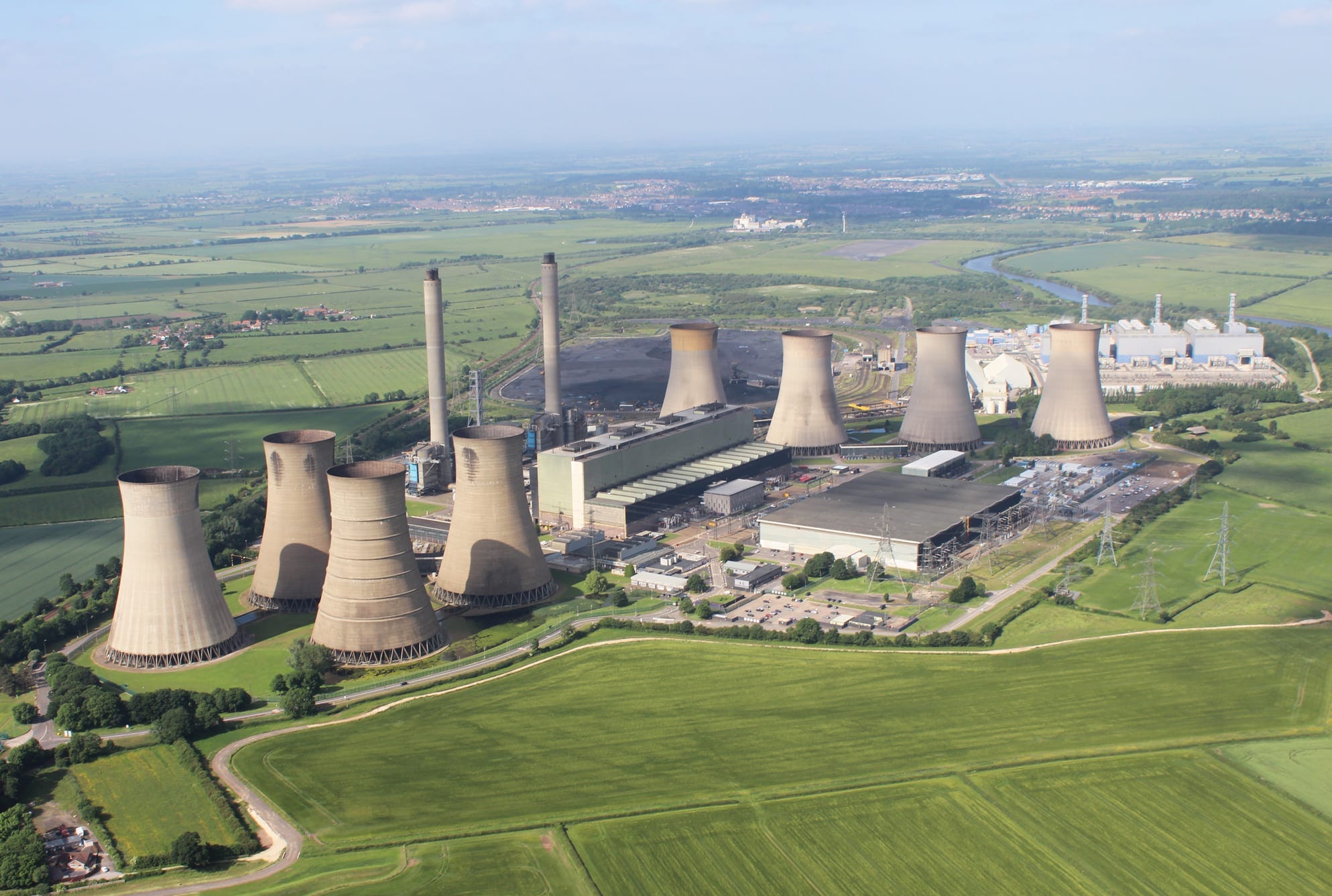
In West Burton, a community defined by deindustrialisation and the recent closure of its coal power station, many saw fusion as a chance for renewal. There was optimism, but it was often cautious and shaped by past experience. Some described supporting the project not because they loved the idea of nuclear fusion, but because they preferred it to other proposed developments, like large solar farms.
In Ardeer, the story was different. The area’s strong environmental identity, and memories of industrial decline, meant people approached fusion with caution. Concerns focused on the landscape, ecology, and whether government promises would last beyond initial investment. The contrast between the two sites underlines how place attachment, the meanings people give to where they live, shapes their sense of what counts as a “good” development.
Across both sites, fusion was often understood through comparison with fission. Many interviewees used fission as a mental shortcut to make sense of fusion’s unfamiliarity, what psychologists call a “heuristic”. This transfer sometimes carried over fears of radiation and waste, even though participants generally recognised that fusion is safer. This shows that communication about fusion isn’t just about facts; it’s about context and how those facts connect to people’s prior experiences.
Media analysis added another layer of insight. National coverage tended to frame fusion as a global, optimistic story of innovation and climate leadership. Local outlets, meanwhile, emphasised jobs, fairness, and environmental risk; concerns that reflect the lived realities of communities near potential sites. These framings often echoed in interviews, suggesting that local media remain an important bridge between national narratives and community-level discussion.
So what does this mean for fusion developers and policymakers?
The findings suggest that early, open, and locally grounded engagement is essential. People want transparency about how decisions are made, realistic expectations about timelines and benefits, and honesty about uncertainty. Technical progress alone won’t build public trust, that comes from long-term relationships, not press releases.
Fusion’s story is often told as a technological frontier. But its future will also depend on how well it fits into people’s sense of place. The science may be universal; the acceptance will always be local.
Dr Megan Connolly holds a PhD in Politics and Environment from the University of York, completed in collaboration with the UK Atomic Energy Authority, and a Master’s degree in Water, Energy & Environment from Liverpool John Moore’s University. Throughout her research, she has focused on energy and climate policy, emphasising thoughtful and inclusive public engagement.
Connect with Megan on LinkedIn.
Want to respond? Leave a comment below or get in touch to share your own contribution at hello@openfusioncollective.org